Our Blog

Which toothpaste should I use?

August 2nd, 2023

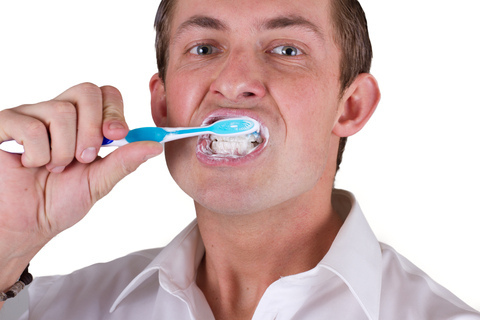
Toothpastes come in many forms and boast different flavors, benefits, and endorsements. All are designed to remove surface bacteria and prevent the buildup of plaque that can cause tooth decay. With so many choices, our doctors and our team at Oak Grove Dentistry know that selecting the right toothpaste can be intimidating. After all, some benefits are welcome bonuses, while others are absolutely essential. So how can you know which toothpaste is best for you?

ADA Seal of Approval

While all toothpastes must first be approved by the Food and Drug Administration for sale to consumers, the American Dental Association puts these products through further rigorous tests for safety and effectiveness. Toothpaste that boasts the ADA Seal of Approval can be trusted to do exactly what it claims.

Fluoridated

Fluoride is an essential ingredient in a daily toothpaste. It helps to protect the tooth from decay by removing plaque and strengthening the enamel. Although fluoride is found in many public water supplies, many people are deficient in it due to the consumption of bottled water instead of tap water. All toothpastes with the ADA Seal of Approval contain fluoride.

Other benefits

If a toothpaste meets the ADA’s standards and contains fluoride, the next step is to clear it with your dentist. This is especially true if you decide to use a whitening toothpaste, which often contains abrasives to remove surface stains. Though abrasives are an effective aid in tooth whitening, they may not be recommended if you have weak tooth enamel.

Specialty toothpastes

In certain situations, our doctors may suggest or prescribe specialty toothpaste, depending on your oral health needs. For example, patients who are prone to tooth decay and cavities despite frequent brushing and flossing may benefit from prescription-strength fluoridated toothpaste to help prevent the weakening of tooth enamel. Others who suffer from tooth sensitivity may benefit from the use of desensitizing toothpaste. Talk with our doctors if you think a specialty toothpaste could be right for you by scheduling an appointment at our Green Bay office.

The Link Between Dental Hygiene and Your Overall Health

August 2nd, 2023

When patients of Oak Grove Dentistry hear any mention of oral or dental hygiene, they probably think of brushing and flossing their teeth. Although these are extremely important, the term dental hygiene encompasses much more than that. Your mouth’s health, including your teeth, has an important impact on your overall physical health. The National Institute of Dental and Craniofacial Research published the surgeon general's first ever report on dental health. It is called A National Call to Action to Promote Oral Health. In that report, the Surgeon General states that the 1948 World Health Organization expanded its earlier definition of health to "a complete state of physical, mental, and social well-being, and not just the absence of infirmity."

The Importance of Oral Health to Total Overall Health

One of the most important themes that the dental health report stressed is that you cannot be healthy without oral health. It went on to explain that oral health and general health are inextricably linked, and therefore can't be seen as two separate things. Because oral health is so critical to overall health, it should be included in all community health programs. For individuals, this means that it is just as important to take care of your mouth, your teeth, and your overall oral health as it is to take care of the rest of your body. The two most prevalent dental diseases are caries (cavities), also known as tooth decay, and periodontal (gum) disease.

Ways that Oral Health Impacts Overall Health

One important way in which good oral health contributes to better overall health is seen in the findings of several studies in which the blood sugar levels of diabetic patients were significantly lowered when their periodontal (or gum disease) was successfully treated. Your mouth has roughly 500 different species of bacteria. Many are harmless, and some are even good bacteria that help maintain the balance of your intestinal flora. Harmful bacteria can infect your gums, causing gingivitis. Your body's immune system may try to fight off the alien invaders, but they attack your gums, causing inflammation and bleeding when you brush.

Now that you know how important good dental hygiene is, be sure to see to get your teeth cleaned every six months, have regular dental checkups, brush and floss your teeth at least twice daily, and replace your toothbrush at least every couple of months. Call us to schedule your next appointment at our convenient Green Bay location.

How Smoking Increases the Risk of Oral Cancer

July 26th, 2023

Cigarette smoke contains more than 6,000 chemicals, and at least 200 of those chemicals are known to be harmful to your health. When smoke is inhaled, moist oral tissues are saturated with excessive amounts of carbon monoxide, hydrogen cyanide, and a host of other known carcinogens. Most oral cancers originate in abnormal squamous cell activity, which are cells found on the lips, inside the mouth, and in the throat.

How Oral Cancer Begins

Cells exposed to consistently high levels of cigarette smoke may eventually suffer abnormal mutations within their DNA. Since deoxyribonucleic acid (DNA) is responsible for providing cells with instructions about growth, reproduction, and death, these instructions become distorted, which causes the cells to reproduce uncontrollably.

Essentially, that is what cancer is: rapid, unchecked growth of genetically mutated cells that encourages the development of malignant tumors. Unfortunately, the chemicals in cigarette smoke are strongly associated with oral cancer.

Signs of Oral Cancer

Early-stage oral cancer is often asymptomatic, which means symptoms appear only after the cancer intensifies and spreads. Possible signs of oral cancer include:

  • Ulcers inside the mouth or on the lips that do not heal
  • White or dark red patches inside the mouth
  • Lumps inside or around the mouth (a lump could appear on your neck)
  • Bleeding, numbness, and soreness in the mouth
  • Chronic halitosis
  • Loose teeth in the absence of tooth decay

Diagnosis and Treatment of Oral Cancer

Squamous cell oral cancer is the most common type diagnosed in smokers. our doctors and our staff often discover squamous cell carcinoma lesions during dental examinations or cancer screenings. Depending on the stage of the oral cancer, treatment may begin with a biopsy or an exfoliative cytology procedure that involves collecting cells from the oral cavity using a scraper.

According to the Oral Cancer Foundation, oral cancer patients may need surgery, radiation therapy, a combination of surgery and radiation therapy, or chemotherapy to eradicate oral cancer.

Smoking, Cancer, and Tooth Decay

Not only is smoking the number-one cause of cancer but it is also detrimental to the overall health of your teeth and gums. Yellow teeth, bad breath, dry mouth, and expedited tooth decay are all caused by smoking, not to mention the damage smoke does to the heart, lungs, and kidneys.

In other words, don’t smoke!

When should a filling be replaced?

July 26th, 2023

There is no substitution for a natural healthy tooth. Dental fillings are intended to replace tooth structure and restore a tooth damaged by decay (a cavity) back to its normal function and shape. Silver (amalgam) and tooth-colored (composite) fillings last a long time, though they can develop decay when the integrity is compromised by open margins, fracture, or recurrent decay. In this blog, we discuss the signs and symptoms that indicate your filling may need to be replaced in order to prevent further complications.

Amalgam fillings are made of an alloy (mixed metals) that expands and contracts. They have no bonding properties, and so to place an amalgam filling, the hole in the tooth may need to be larger. Because of these two factors, fractures frequently occur. There are three types of cracks that are commonly associated. Craze lines are superficial with no treatment needed. Fractures extend along other parts of the tooth and may require a filling replacement or crown. Cracks extend toward the root and can require a root canal and crown or, if too severe, extraction.

A filing needs to be sealed to the tooth. If the seal between the tooth and the filling breaks down, food debris and bacteria can seep down under the filling and cause recurrent decay. If the decay is treated early, replacing the filling is adequate. If not, a crown and even a root canal may be needed. The biggest mistake you can make is waiting to do something about a broken or unsealed filling until it is painful. Doing this will only make the treatment more involved and often times more expensive.

Regular dental exams and X-rays are used to evaluate dental fillings. You will not be able to tell on your own when your fillings start to fail. Just as a car mechanic will change the oil, correct your alignment, or change your tires, a dental checkup will help you identify small concerns to fix as you go in order to avoid a critical emergency.

Pay attention to any bite or temperature sensitivity in teeth that have fillings. This can be an indicator for some of the problems listed above. You know your teeth better than anyone. Your observations are most valuable when evaluating a filling for replacement. If replacement is needed, know you are doing what is best to prevent future dental calamities and make an appointment to see our doctors.