Our Blog

Pick the right electric toothbrush!

March 2nd, 2022
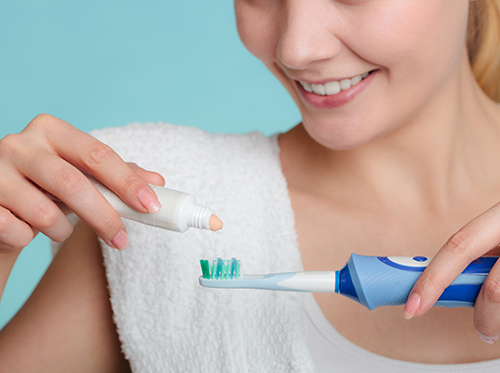
The electronic toothbrush has undergone several technological advances since the 1960s. Everything from design and bristle motions to rotation, oscillation, and sonic vibration has led to dramatic changes in this necessary tool over time.

Rotation oscillation happens when the head of the toothbrush rotates from one direction to the other. The benefit of powered toothbrushes is that they can produce 50,000 strokes per minute, compared to 300 strokes with a manual toothbrush.

When you’re thinking about brush head size, smaller brush heads are best for hard-to-reach areas and small mouths. Brush heads should be replaced every three to six months as needed. A good way to save money is to designate a brush head for each family member which can be taken on and off a shared base motor.

Having a base motor or rechargeable toothbrush can deliver enough power on a full charge for a week of brushing, which makes it convenient for travel or when life gets busy. Some toothbrushes include audible signals that let you know when to switch the area of your mouth you’re brushing or when a full two minutes has gone by.

Do you have sensitive teeth? Studies have indicated that people tend to apply more pressure on their teeth when they use a manual toothbrush. This makes an electric toothbrush a preferable option if you’re having issues with sensitive teeth or gums.

There are even electric models with pressure sensors that will stop the brush from spinning when you press too hard against your teeth!

Everyone can benefit from having an electric toothbrush. A large handle size can be taken into consideration if a member of the household is young, or has a physical disability or arthritis. They’re even recommended for children in order to maintain good oral hygiene from a young age.

Biofilm is a term used for plaque or debris that builds up in your mouth. If not properly addressed, this can cause serious bacterial infections to your gums and teeth. If you want to remove biofilm in the most efficient way, an automatic toothbrush is the way to go.

When you're ready to make your decision, make sure to consult with our doctors at our Green Bay office to decide which electric toothbrush is right for you!


What to Do If You Lose a Filling

February 23rd, 2022

It really doesn’t happen very often. But sometimes you bite into something that is much harder than you anticipated. Sometimes you grind your teeth without realizing the pressure you’re putting on them. Sometimes you have a cavity that has stealthily developed beneath an earlier filling. And the result is—sometimes you lose a filling.

What to do when this happens? If you’re at a loss for ideas, we have some suggestions.

  • Don’t panic

Usually, a cracked, broken, or lost filling is not an emergency situation. That being said, it’s still important to . . .

  • Call us immediately

our doctors will be able to give you the best advice as to how to take care of your tooth until you can make an appointment. And if your dental problem might be a dental emergency, we can make sure you are seen as soon as possible.

  • Take care of your tooth

Keep your tooth and the area around it clean. Brush gently to keep food particles away from the newly exposed tooth surface. You can (carefully) rinse around the area with a bit of water or salt water as recommended.

Your lost filling might not inconvenience you at all. But if you feel sensitivity when the tooth is exposed to air, or when you eat hot or cold foods, or if you feel pain when you bite down, let us know. We can recommend some over the counter medications and pain relievers that can help.

If you’re experiencing severe pain, call us at once.

  • Diet

This might not be the time for sticky caramels, frozen treats, or extra-hot beverages. Make yourself comfortable by avoiding chewing with your compromised tooth, and postponing foods that could trigger sensitivity.

  • Make a dental appointment as soon as you can

Don’t put off treatment, even if the filling was a small one, and even if the tooth is causing you no discomfort.

There might be further damage or decay that should be treated. A tooth that required a large filling is often more fragile than an intact tooth, and might need to be fitted with a crown in order to protect it. A missing filling might reveal deep decay which has exposed the pulp of the tooth to infection or damage, and a root canal might be necessary. A seriously damaged tooth might require extraction. Delaying treatment could result in a more complex restoration.

See us as soon as you discover a problem with your filling, and we will make sure not only that your tooth is treated appropriately, but that the reason for the lost filling is discovered. While no filling lasts forever, if the cause of your lost filling is tooth grinding or decay, it’s important to be proactive to prevent further problems.

Losing a filling? It really doesn’t happen very often. But that’s not a lot of comfort if you do happen to lose or break a filling. If you’re at a loss for what to do next, contact our Green Bay office. You’ll find yourself smiling again in no time!

Does Your Child Need Endodontic Treatment?

February 16th, 2022

Baby teeth come with a built-in expiration date. That charming first smile is meant to make way for a healthy, beautiful adult smile. Unfortunately, before they are ready to make way for permanent teeth, primary teeth can be affected by decay, trauma, or infection—problems which can lead to damage to the pulp within the tooth. If your dentist tells you that your child’s tooth needs specialized endodontic treatment, is treatment really that much better for your child than losing a baby tooth prematurely?

Quite often, the answer is yes!

Baby teeth do much more than serve as temporary stand-ins for adult teeth. They are essential for:

  • Biting and chewing—a full set of baby teeth helps your child develop proper chewing, which leads to healthy digestion. And chewing also helps build face and jaw muscles.
  • Speech development—primary teeth help guide speech production and pronunciation.
  • Spacing—a baby tooth serves as a place holder for the adult tooth waiting to arrive. If a primary tooth is lost too early, the remaining baby teeth may drift from their proper location. This, in turn, can cause overcrowding or misalignment of the permanent teeth when they do erupt.

Baby teeth, like adult teeth, contain living pulp tissue. The pulp chamber inside the crown (the visible part of the tooth) and the root canals (inside each root) hold nerves, blood vessels, and connective tissue. When the pulp is damaged by trauma or infected, a baby tooth can still be saved with endodontic treatment. Endodontic treatment in baby teeth can take two forms.

  • “Vital” pulp is pulp that can be saved. Vital pulp therapy uses procedures to deal with damaged pulp inside the crown, or visible part, of the tooth. Pulp therapy can be used on teeth when only the top of the pulp has been affected by decay, limited exposure, infection, or trauma, but the root pulp remains healthy. Specific treatment will depend on the nature of the pulp injury, and a crown will usually be placed over the tooth after treatment to protect it.
  • With non-vital pulp, your dentist will probably recommend a traditional root canal procedure. All of the pulp tissue will be removed from inside the crown and the roots, and the pulp chamber and root canals will then be cleaned, disinfected, shaped, and filled. Finally, because the treated tooth will be more fragile, a crown will be used to protect the tooth from further damage.

There can be good reasons for extracting a seriously damaged baby tooth, and there are situations where preserving the tooth is the best and healthiest option for your child. Discuss your options with our doctors when you visit our Green Bay office for the safest, most effective way to treat your child’s compromised tooth.

The Transformation of Valentine's Day

February 9th, 2022

Did you know the actions leading to the beginnings of Valentine's Day were actually centered on the avoidance of war? A Catholic priest named Valentine defied the orders of the Emperor Claudius II and secretly married young men and their brides after the emperor had declared it illegal because only single, young men could be sent to war. Rather than lose potential soldiers to fight his war, Claudius attempted to hoard them by proclaiming marriage illegal.

Valentine continued to marry young couples anyway and, eventually, was put to death for it in 270 AD. Before his death, he sent a letter to a secret love and signed it “From your Valentine”. Nearly 1,800 years later, people are still signing letters and cards in this manner. This year, carry on the tradition started long ago, while adding your own twist. Here are a few suggestions.

Simple and Creative Valentine's Day Ideas

  • Memorialize it with a Photo. Couples often have photos taken around Christmas, but Valentine's Day photos allow you to capitalize on romance. Famous couple Julia Child and her husband, Paul, had their picture taken together every Valentine's Day and included their sense of humor with silly props.
  • Return to Your First Date Location. Even if your first date together was at a local hotdog stand, its sentimental value can make it a fun part of your Valentine's Day agenda. Be creative and make a treasure hunt with clues that lead your partner to the original date location, where you can express your love with flowers or a gift.
  • “From Your Valentine” Messages. Deliver your message in a creative way to make this Valentine's Day stand out from the others. Bake your partner's favorite treat and write a message on it with a tube of icing, or draw a note on the steamed up mirror so it shows up when your partner takes a shower.

Although Valentine's Day is a day to celebrate love, it doesn't have to be a special day only for couples. If you're single, use this special day to shower yourself with love, because you're worth it! After all, the priest Valentine believed so strongly in the sanctity of love that he was willing to risk his life for it. Whether you're in a relationship or single, young or old, romantic or not, Valentine's Day is for you. Happy Valentine’s Day from the dental office of our doctors.