Our Blog

When to Begin Dental Care for Your Child

February 17th, 2021

Children’s oral health differs from that of adults in a variety of ways. our doctors and our team want you to understand how you can provide the best care for your son or daughter’s teeth. It’s essential to understand what your child will need from you when it comes to his or her oral health in those first few years.

In-home dental care begins when your baby starts to show signs of developing the first tooth. We recommend that you bring your child to our Green Bay office between the ages of one and two. our doctors will take a look at your child’s tooth development and gums during this first scheduled appointment.

The initial appointment with your little one is designed to get him or her accustomed to our office. We recommend allowing your child to be in the exam room alone with us during the first visit in order to become comfortable with our staff at an early age.

We will go over several general matters during your child’s first visit:

  • Look for signs of decay or other tooth or gum problems
  • Make sure your youngster doesn’t have gum disease or cavities
  • Examine your child’s bite, and check for misalignment that could lead to problems in the future
  • Clean the teeth, and apply fluoride if your son or daughter is old enough
  • Talk to you about proper oral health care for your
  • Give you some tips for brushing and flossing your child’s teeth
  • Answer any questions you may have about caring for your little one’s teeth

Once your child is old enough for his or her first visit to the dentist, you should begin to schedule regular cleanings every six months. If any problems arise before a scheduled appointment, call our Green Bay location and we will be happy to answer any questions you may have.

Remember, creating healthy oral health habits with your child early on is crucial. We’re here to guide you through this process and make sure your child is healthy and happy.  

Valentine's Day History

February 10th, 2021

Valentine’s Day is best known as a celebration of love in all its forms. Pink hearts, red roses, and cute greeting cards adorn every surface you see. What many people don’t realize is that the modern Valentine’s Day celebration arose from a religious holiday.

St. Valentine’s Day was originally celebrated as a religious feast day in honor of early Christian martyrs. Three martyrs named Valentine were honored: a priest in Rome, the persecuted bishop of Interamna (a town in central Italy), and a saint martyred in Africa. This saint’s day was celebrated throughout Christendom, although it was removed from the Roman Catholic Calendar of Saints in 1969.

The origin of Valentine’s Day as a holiday for lovers began with Geoffrey Chaucer in his 1382 poem “Parlement of Foules.” Chaucer wrote, “For this was on Saint Valentine’s Day, when every bird cometh there to choose his mate,” and the modern romantic holiday was born. William Shakespeare and other writers mentioned Valentine’s Day as a day of love.

Valentine’s Day as we know it came about in the early 19th century. In Victorian England, printers began manufacturing small numbers of cards with romantic verses, lace, ribbons, and other frills. Anonymous Valentine’s Day card were a popular way for young lovers to exchange romantic sentiments in an otherwise prudish time. As the 19th century progressed, printers began mass manufacturing Valentine’s Day cards. People in the United States give an estimated 190 million valentines every year, and up to one billion if you count children exchanging cards at school! With the rise of the Internet, Valentine’s Day e-cards have become a popular mode of communication, with millions of e-cards sent each year.

The other items associated with Valentine’s Day include chocolate and flowers. The tradition of giving chocolates has been around for decades, and Richard Cadbury created the first box of Valentine’s Day chocolates nearly 150 years ago. Today, purchases of chocolate total over $1 billion in the United States alone, with 35 million heart-shaped boxes sold each year. Loved ones also exchange flowers, with red roses being associated with Aphrodite, the Greek goddess of love. On Valentine’s Day itself, florists sell nearly 200 million stems of roses.

Although many people dismiss Valentine’s Day as a commercialized “Hallmark holiday,” it is beloved to couples and romantics across the United States and other countries. The team at Oak Grove Dentistry wants to remind all patients that no matter what your celebratory plans, February 14th can be a wonderful day to celebrate the loved ones in your life. Happy Valentine’s Day!

Why do wisdom teeth need to be removed?

February 3rd, 2021

Sometime around the late teens or early twenties, people’s wisdom teeth start to erupt. These are the third and final set of molars. When wisdom teeth come in properly — meaning they are correctly aligned — they offer more chewing power. Unfortunately, more often than not, wisdom teeth are misaligned, crowd other teeth, and need to be removed.

Why do we have wisdom teeth?

It is thought that we have wisdom teeth because — back in the day — we ate a diet that consisted of more rough foods, like roots, leaves, and meat, all of which required more heavy-duty chewing power.

Reasons Wisdom Teeth Need to be Removed

While there is no clear-cut rule that says every single person needs to have their wisdom teeth removed, there are certain situations where one or more wisdom teeth are causing a problem or have a strong likelihood that problems will eventually arise in the future that warrant their removal.

1. Fully Impacted Wisdom Teeth

When a wisdom tooth is “impacted”, it means that the tooth is covered by gum tissue, thereby preventing it from erupting through the gum. This often occurs when the mouth is too small to allow enough room for the tooth to emerge. Because bacteria, food, or other mouth substances can be lodged under the gum that covers the wisdom tooth, it can lead to an acute abscess, known as pericoronitis.

2. Partially Impacted Wisdom Teeth

When a wisdom tooth is partially impacted, meaning the tooth is partially emerged from the gums, it almost always is advised to be removed. Because of its location in the very back of the mouth, a partially erupted wisdom tooth is more susceptible to not only decay and cavities, but also gum disease.

3. Other Reasons to Have Wisdom Teeth Removed

If you experience any of the below dental issues or changes in your dental health, removal of your wisdom tooth (teeth) may be necessary:

  • Pain at or surrounding the wisdom tooth site, including the jaw or cheek area
  • Repetitive infections
  • Gum disease
  • Tooth decay (extensive)
  • Tumors
  • Cysts
  • Damage to surrounding teeth

It is important to know that the decision to have a wisdom tooth removed isn’t always cut and dry. It is essential to talk to our doctors about the alignment of your wisdom teeth if they have already erupted, health of your wisdom teeth if impacted or partially impacted, and your overall dental health to determine what is best for your situation. Contact our Green Bay office to schedule an appointment today!

What’s the Big Deal about Sleep Apnea?

January 27th, 2021

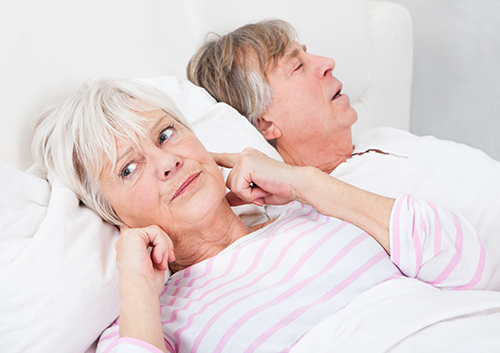
What’s the big deal about a little snoring during the night? Or feeling a bit drowsy during the day? Or an occasional bout of insomnia? If your sleep problems are few and far between, probably not a major worry. But if your sleep disruptions are frequent, getting worse, or more noticeable to those around you, your problem might be sleep apnea. And that can be a big deal.

Sleep apnea occurs in three forms:

  • Obstructive sleep apnea

This is the most common form of sleep apnea. It can be the result of the muscles in the back of the throat relaxing during sleep to obstruct the airway. Obstruction can also be caused by a physical condition such as a deviated septum, excess throat tissue or enlarged tonsils.  Loud snoring often results as the sleeper struggles to inhale through the obstructed passageway.

  • Central sleep apnea

Central sleep apnea is caused by the brain failing to transmit the proper signals to breathe during sleep. The sleeper either stops breathing, or takes such shallow breaths that he or she can’t get enough air into the lungs.

  • Complex sleep apnea

This condition is a mix of both obstructive and central sleep apnea.

Any of these forms of sleep apnea will cause a miserable night’s sleep. Sufferers actually stop breathing for a brief time. To start breathing properly again, our bodies move from the deep sleep we need to restore our physical and mental health to shallow sleep or even momentary wakefulness. And these disruptive episodes can happen dozens of times an hour, all night long. You might think you have gotten a full night’s sleep, while in reality you are suffering from sleep deprivation.

When you suffer from obstructive sleep apnea, the immediate consequences are easy to see and hear. Loud snoring, choking, constant drowsiness—you (and your loved ones) suffer from these symptoms night and day. But the hidden consequences of this disorder are even more dangerous. Sleep apnea has been linked to high blood pressure, heart disease, and strokes. It can cause memory problems, depression, and mood changes. Loss of focus and slow reflexes can lead to accidents. Complications from general anesthetics and medications can also become a serious risk.

Snoring is not the only symptom of sleep apnea. If you notice that you often wake up with a sore throat, a dry mouth, or a headache, have difficulty going to sleep at night or staying awake during the day, can’t concentrate,  or constantly feel irritable—you should consider the possibility that you suffer from sleep apnea. Talk to our doctors at our Green Bay office. We can recommend options that will have you once again sleeping soundly in your bed, waking up refreshed and healthy. And that is a big deal.