Our Blog

Thanksgiving

November 27th, 2019

At Oak Grove Dentistry, we love to celebrate the holidays with vigor! our doctors would love to share some unique ways of celebrating Thanksgiving from beyond the Green Bay area to the national level!

When Americans sit down to dinner on the last Thursday of November, the day that Abraham Lincoln designated as the day on which Thanksgiving would be celebrated, they do so thinking that the first Thanksgiving feast was held at Plymouth in 1621. According to National Geographic, the Spanish explorer Francisco Vásquez Coronado and his men celebrated a feast of Thanksgiving in Texas in 1541, giving Texas the distinction of being the first place where Thanksgiving was celebrated.

Different Types of Celebrations

Native Americans had rituals around which they celebrated in hopes of ensuring a bountiful harvest. The Cherokees had a Green Corn Dance that they did for this very purpose. The Pilgrims (not to be confused with the Puritans,) rejected any type of public religious display. They held a three-day long non-religious Thanksgiving feast. Although they said grace, the focus of their celebration was on feasting, drinking alcohol (they did have beer,) and playing games.

The Pilgrims at the Plymouth Plantation celebrated a different day of Thanksgiving in 1623. Plagued by a crop-destroying drought, the settlers prayed for relief. They even fasted. A few days later, they got the rain they so desperately needed. Soon thereafter, they received another blessing when Captain Miles Standish came with staples they couldn't otherwise get. He also told them that a Dutch supply ship was en route. In gratitude for the abundance of good fortune, the Plymouth settlers celebrated a day of prayer and Thanksgiving on June 30, 1623.

The Story of Squanto

No discussion of Thanksgiving is complete without a discussion of Squanto, or Tisquantum, as he was known among his people, the Patuxet Indians. It is believed that he was born sometime around 1580. As he returned to his village after a long journey, he and several other Native Americans were kidnapped by Jamestown colonist, Thomas Hunt. Hunt put them on a ship heading to Spain where they were to be sold into slavery.

As fate would have it, some local friars rescued him and many of the other kidnapped natives. Squanto was educated by the friars. Eventually, after asking for freedom so he could return to North America, he ended up in London where he spent time working as a ship builder. By 1619, he was finally able to get passage on a ship headed to New England with other Pilgrims.

Upon arriving at Plymouth Rock, he learned that his entire tribe was wiped out by diseases that accompanied earlier settlers from Europe. In gratitude for passage on their ship, he helped them set up a settlement on the very land where his people once lived. They called the settlement Plymouth. Since they knew nothing about how to survive, let alone how to find food, Squanto taught them everything, from how to plant corn and other crops, how to fertilize them, how and where to get fish and eels and much more.

After a devastating winter during which many settlers died, thanks to Squanto's teaching, they had an abundant harvest. After that harvest, they honored him with a feast. It is this feast of 1621 which was celebrated between the Pilgrims and Wampanoag Indians that is widely considered the first Thanksgiving celebration.

About the Meal of the Plymouth Settlers

Surviving journals of Edward Winslow that are housed at Plymouth Plantation indicate that the first Thanksgiving feast was nothing like what Americans eat today. The meal consisted of venison, various types of wild fowl (including wild turkey,) and Indian corn. There were no cranberries, stuffing, pumpkin pie, potatoes, or any of the other “traditional” foods that appear on modern menus.

Today, Thanksgiving is celebrated on the fourth Thursday of November, the day that Abraham Lincoln designated as the holiday. It is still a day of feasting, and for some, a day of prayer and thanksgiving. For others, it is a celebration of gathering, especially for families. Still others may celebrate in entirely different ways, including watching college football bowl games, or by playing family games.

If you ever wonder why you're so tired after the Thanksgiving meal, it's because turkey contains an amino acid, tryptophan, and it sets off chemicals whose chain reaction combine to make people sleepy.

Adults Can Get Cavities Too

November 20th, 2019

Sure, you brush your teeth and floss regularly, so you might think you’re off the hook when it comes to the dental chair. However, it’s just as important for adults to get regular dental exams as it is for kids. Cavities are common among adults, with 92% of people aged 18 to 64 having had cavities in their permanent teeth, according to the National Institute of Dental and Craniofacial Research.

How cavities form

Our mouths are teeming with hundreds of types of bacteria. Some are helpful and maintain good health, while others are harmful. Certain types of bacteria process the sugars in food and release acid in return. Although minor decay can be naturally reversed by your body, our doctors and our team at Oak Grove Dentistry will tell you that eventually the acid wears away the enamel and creates small holes in the surface of teeth.

Cavity prevention for adults

Some people are naturally more prone to cavities than others. However, making a few lifestyle changes can dramatically reduce your likelihood of developing cavities.

  • Food choices. Eating plenty of fresh fruits and vegetables increases saliva production, and reduces cavity risk. It is also important to avoid foods that get stuck in the ridges of your teeth. Candy, cookies, and chips should be eaten sparingly.
  • Beverages. Most people know that drinking soda contributes to tooth decay. However, fruit juices and energy drinks also contain large amounts of sugar. Whenever possible, replace these sugary beverages with tea or water, which rinses your mouth and prevents decay.
  • Fluoridated water. Fluoride is a naturally-occurring chemical that facilitates enamel growth. Most municipal water supplies are fortified with fluoride, so drinking tap water is a great way to keep teeth healthy. People with well water may use fluoridated toothpaste or other supplemental forms of fluoride to decrease cavity risk.
  • Brush teeth and floss frequently. Gently brushing teeth several times a day removes the harmful bacteria that cause cavities to develop. If possible, brush your teeth after each meal or when drinking sugary beverages. Flossing regularly removes small particles that get trapped between teeth, which further decreases tooth decay.

One of the most important steps in cavity prevention is visiting your dentist at least twice a year. Consistent dental exams ensure that cavities are caught early, before they cause major damage to your teeth.

For more information about avoiding cavities, or to schedule an appointment with our doctors, please give us a call at our convenient Green Bay office!

Post Oral Surgery: Signs of Infection

August 7th, 2019

Oral surgery can be intimidating, especially if you show any signs of an infection afterwards. Drs. Nicholas and Josephine Van Ess and our team want you to be informed about what to watch for after you’ve undergone surgery.

Oral surgery procedures are intended to reduce pain and prevent infection. Sometimes complications occur after your surgery, and if infection ensues, it will require swift medical attention.

People undergo oral surgery for many reasons, such as:

  • Impacted or infected teeth
  • Tooth loss, jaw problems
  • Facial injuries or infections
  • Birth defects
  • Sleep apnea

Symptoms of Infection

  • Pain that won’t go away with medication
  • Steadily swelling of gums, jaw, or face
  • Redness or oozing of pus from the area
  • Fever that doesn't subside
  • Difficulty opening the mouth or jaw
  • Excessive bleeding for 24 hours
  • Difficulty breathing or swallowing (emergency situation)

After the initial surgery, don’t become worried right away if you notice any of these symptoms. It’s normal to show some blood and swelling after surgery, but that should stop fairly soon with the help of gauze and medication.

You will most likely be numb from the procedure and we will advise you to avoid hard foods for the first day. Pain medication will be administered, and you should take it before you begin to notice pain. A cold compress can also help with swelling and initial pain.

You will be advised not to brush your teeth in the region where the surgery occurred. You may use a prescription mouth rinse, or you can gargle with warm salt water to reduce the swelling. If you follow these directions, you can speed the healing process for a quick recovery.

Don’t fret: a post-surgery infection is not a common development. It happens most often to people who have a compromised immune system or diabetes. Let Drs. Nicholas and Josephine Van Ess know beforehand if you have either of these and we may prescribe an antibiotic to help prevent the spread of infection in the areas of your mouth that get worked on.

If you think you may be experiencing complications after a surgery, please don’t hesitate to reach out to our Green Bay office for advice.  

Timing Matters!

July 17th, 2019

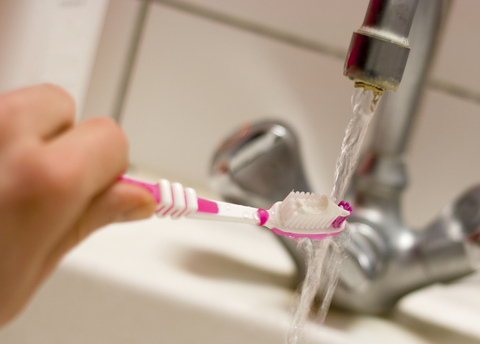
Many patients at Oak Grove Dentistry are under the impression that harder brushing leads to cleaner teeth, but that is not true. Gentle brushing is just as effective, and less likely to cause damage. Other good brushing habits include brushing your teeth at least twice a day, replacing your toothbrush after a few months, and brushing for at least two minutes each time. It can be tough to keep track of the time when you are aiming for two minutes, but these tips can help.

Set a Timer

Setting a timer is a sure-fire way to hit your two-minute goal on the dot. Leave a kitchen timer in your bathroom so that it is easy to set each time you start brushing your teeth. Hit each surface of all of your top and bottom teeth, and keep brushing until the timer rings. Many electric toothbrushes have a built-in timer that you can use instead of a kitchen timer.

Entertain Yourself for Two Minutes

Time flies when you are having fun, and you can stay entertained as you brush your teeth for two minutes. These are some ideas.

  • Time your favorite song and sing it in your head as you brush your teeth.
  • Find a two-minute video on the Internet that you want to watch, and start it when you begin to brush your teeth.
  • Do squats in the bathroom as you brush. Go down for three slow counts, and up for three slow counts. By the time you get to 20 squats, your two minutes will be over.

Let Your Children Use Technology

Toothsavers is an app designed to inspire children to brush. The app was developed and released by the Ad Council and the Partnership for Healthy Mouths, Healthy Lives. It includes:

  • A game to fight an evil sorceress who causes cavities
  • A two-player version that lets children interact with friends and parents
  • Real-life reminders to brush twice a day
  • A built-in timer that helps kids brush for two minutes